You’ve downloaded budgeting apps, tried making your own spreadsheets, promised yourself you’d “get serious this time.” And yet… a few weeks later, you’re back to swiping your card, wondering why your budget never seems to stick
Here’s the truth: most budgets fail not because you’re bad with money, but because the budget itself isn’t built to work.
The good news? You don’t need more willpower; you just need a better system. In this post, we’ll walk through the most common reasons budgets don’t last and exactly how to fix each one:
- You’re Making Your Budget Too Restrictive
- You’re Not Accounting for Irregular Expenses
- You Don’t Have Clear Financial Goals
- You’re Not Reviewing Your Spending Regularly
- You’re Forgetting About Your Net Worth
- You’re Not Using the Right System
And if you want a tool that actually makes this easier (instead of harder), our Budget Spreadsheet + Net Worth Tracker is built to help you finally create a budget that works for your life.
You’re Making Your Budget Too Restrictive
Summary: Most budgets fail because they cut out all fun spending. A budget that’s too strict feels like punishment and is almost impossible to stick to.
A lot of people approach budgeting like it’s a diet: no lattes, no shopping, no dinners out. And just like crash diets, it doesn’t last. When your budget feels like punishment, it’s only a matter of time before you “cheat” and then give up altogether.
Think about the last time you started a budget. Did you promise yourself “no more eating out” or “no more shopping”? Cutting back on spending is important, but going to extremes almost always backfires. Just like crash diets, overly strict budgets usually lead to burnout and when you “slip up,” you feel guilty and give up altogether.
The truth is, money is meant to be enjoyed, too. Budgeting isn’t about restricting every dollar — it’s about directing your money toward what matters most. That includes the essentials, savings, and yes, fun. By planning for things you enjoy (like brunch with friends or treating yourself occasionally), you’ll actually stick to your budget long-term instead of abandoning it after a few weeks.
Fix it: Build in space for fun. Your budget should reflect your real life, not some extreme version of it. Add categories for coffee runs, concerts, or hobbies. When you plan for these things, you don’t have to feel guilty for enjoying them.
Our Budget Spreadsheet makes this easy with a wide variety of categories so you can design a budget that actually fits your lifestyle.
You’re Not Accounting for Irregular Expenses
Summary: Budgets often break when people forget about irregular expenses like car repairs, holidays, or medical bills. These costs aren’t surprises, they just need to be planned for.
Have you ever thought, I was doing so well with my budget… until that bill hit? The problem isn’t you, it’s that most budgets ignore irregular or seasonal spending.
One of the biggest reasons budgets fail is because people only account for “normal” monthly bills like rent, groceries, utilities, and forget about the expenses that don’t happen every month. The result? You’re cruising along just fine until a $600 car repair, holiday shopping, or your annual Amazon Prime renewal hits, and suddenly your budget is blown.
The reality is, these aren’t true surprises; they’re just irregular. The fix is planning for them in advance. That’s where sinking funds or rollover categories come in. By setting aside a little each month for things like vacations, car maintenance, or gifts, you’ll have the money ready when the bill comes due. Instead of panicking or reaching for your credit card, you’ll feel prepared.
Fix it: Use sinking funds or rollover categories. This way, you set aside a little each month for those bigger expenses. When they pop up, you already have the money waiting.
Our spreadsheet has rollover functions built in, so you can save month to month and smooth out your budget without extra math.
You Don’t Have Clear Financial Goals
Summary: A budget without goals feels pointless. Without saving or debt payoff targets, budgeting turns into tracking numbers instead of making progress.
Here’s the thing: budgeting just for the sake of budgeting isn’t very motivating. If all you’re doing is logging numbers into a spreadsheet or app, it starts to feel like busywork. No wonder so many people give up. The point of budgeting isn’t just to see where your money goes — it’s to help you get where you want to be.
Your budget should be a tool, not a chore. And the best way to make it useful is to connect it to your financial goals. Maybe you want to pay off credit card debt faster, save for a trip abroad, or finally start building your emergency fund. When your budget is tied to something meaningful, every dollar suddenly has a purpose and you’ll feel way more invested in sticking with it.
Fix it: Tie your budget to goals that actually matter to you. Maybe it’s saving for a vacation, building an emergency fund, or paying off your credit card faster. When your budget is connected to a goal, every dollar has purpose.
Our tool includes savings goal planning and progress tracking so you can actually see your progress month after month.
You’re Not Reviewing Your Spending Regularly
Summary: Budgets fail when you “set it and forget it.” Overspending or life changes require regular reviews to keep your budget realistic and on track.
Many people treat budgeting as a one-time task: set it up, write down your numbers, and hope for the best. But life doesn’t work that way. Your income might change, you might overspend in one category, or your priorities might shift throughout the year. If you’re not reviewing and adjusting, your budget stops reflecting reality — and that’s when it starts to fail.
The fix is simple: build regular check-ins into your routine. A quick 10-minute review once a week can help you catch overspending before it gets out of hand. At the end of each month, take a few minutes to look back:
- Where did you stick to the plan?
- Where did you under or overspend?
- Where did your spending change from last month?
- What adjustments do you need for next month?
These little reviews make budgeting a living, flexible tool, not a static plan you forget about.
Fix it: Schedule quick check-ins. A 10-minute weekly review or a monthly recap is enough to catch patterns before they spiral.
Our spreadsheet automatically compares monthly spending and calculates yearly totals, so you can easily see trends and adjust without hours of manual math.
You’re Forgetting About Your Net Worth
Summary: Budgeting alone doesn’t show you the full picture — your net worth tracks your real financial growth.
It’s possible to stick to a budget but still feel stuck financially. That’s because a budget shows your spending, but not how your savings and assets are growing.
If you only focus on budgeting, you might be missing the bigger picture. Budgets are great for tracking day-to-day money management, but they don’t tell you if your wealth is actually growing. That’s where net worth comes in.
Your net worth is simply the value of what you own (savings, investments, assets) minus what you owe (debts). Tracking this number over time helps you see if your financial health is improving, even if your budget feels tight some months. Watching your net worth increase can also be way more motivating than just staring at expense categories.
Fix it: Track your net worth alongside your budget. This shows whether you’re moving closer to financial stability or freedom. Watching your net worth increase is also super motivating.
That’s why our spreadsheet includes a built-in Net Worth Tracker, so you can see the bigger picture while managing your monthly budget.
You’re Not Using the Right System
Summary: The wrong budgeting system makes money management harder than it needs to be. A simple, flexible tool helps you stay consistent.
Sometimes the problem isn’t your habits — it’s your system. If you’re using a budgeting app that feels overwhelming, a spreadsheet that’s too complicated, or random notes on your phone, of course it’s hard to stay consistent. When your system feels like extra work, you’re way more likely to abandon it.
A good budgeting system should save you time, not create more work. It should be flexible enough to adapt to your lifestyle and clear enough that you actually want to use it. When your system works with you instead of against you, budgeting becomes so much easier to maintain.
Fix it: Use a system that’s simple, flexible, and actually saves you time. A good budget should work with your habits, not against them.
Our Budget Spreadsheet + Net Worth Tracker was designed to be that system:
- Monthly income + expense tracking
- Rollover funds for irregular spending
- Automatic yearly totals and monthly comparisons
- Savings goal planning
- Built-in Net Worth Tracker
Everything you need to stay on track — without the overwhelm.
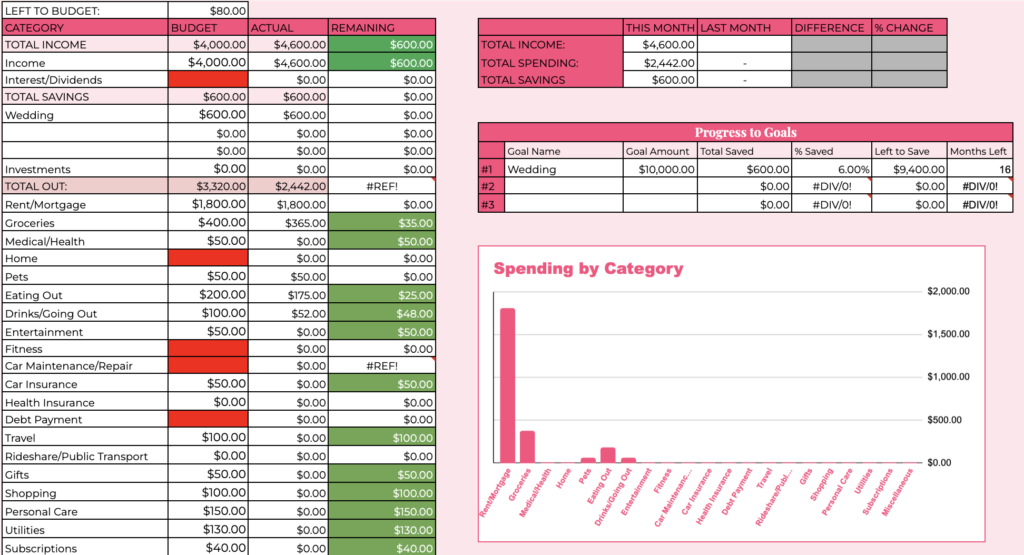
Annual Budget Spreadsheet + Net Worth Tracker
**Tool will be delivered to your email inbox upon purchase**
Take control of your finances with this easy-to-use Annual Budget Spreadsheet. Track your income, expenses, and savings goals while monitoring your financial progress with the Net Worth Tracker. Perfect for planning, budgeting, and seeing your wealth grow—all in one place.
Budgeting doesn’t fail because you’re “bad with money.” It fails when the system is too rigid, incomplete, or disconnected from your actual goals.
By making your budget flexible, planning for real-life expenses, checking in regularly, and tracking your bigger financial picture, you’ll finally build a budget that sticks.
Ready to stop starting over every month? Try our Budget Spreadsheet + Net Worth Tracker and see how much easier budgeting can feel when the system actually works for you.
Budgeting FAQs
Why does my budget always fail?
Budgets usually fail because they’re too strict, ignore irregular expenses, or lack clear goals. The good news is, with the right system, you can fix these issues.
What’s the best way to stick to a budget?
The best way is to make your budget realistic, review it regularly, and use a tool that helps you track both spending and progress toward your goals.
How do I budget for irregular expenses?
Add a “sinking fund” category to your budget. This means setting aside small amounts each month so you’re ready when those irregular costs pop up.
Do I need to track my net worth if I’m budgeting?
Yes! Net worth shows your overall financial health. Budgeting helps with day-to-day money management, while net worth tracks your long-term growth.
What tool should I use to budget?
Use a flexible budget spreadsheet that tracks income, expenses, savings goals, and net worth. Ours makes this simple with automatic calculations and rollover funds.